Garbage Disposal Repair: When to Repair vs. Replace
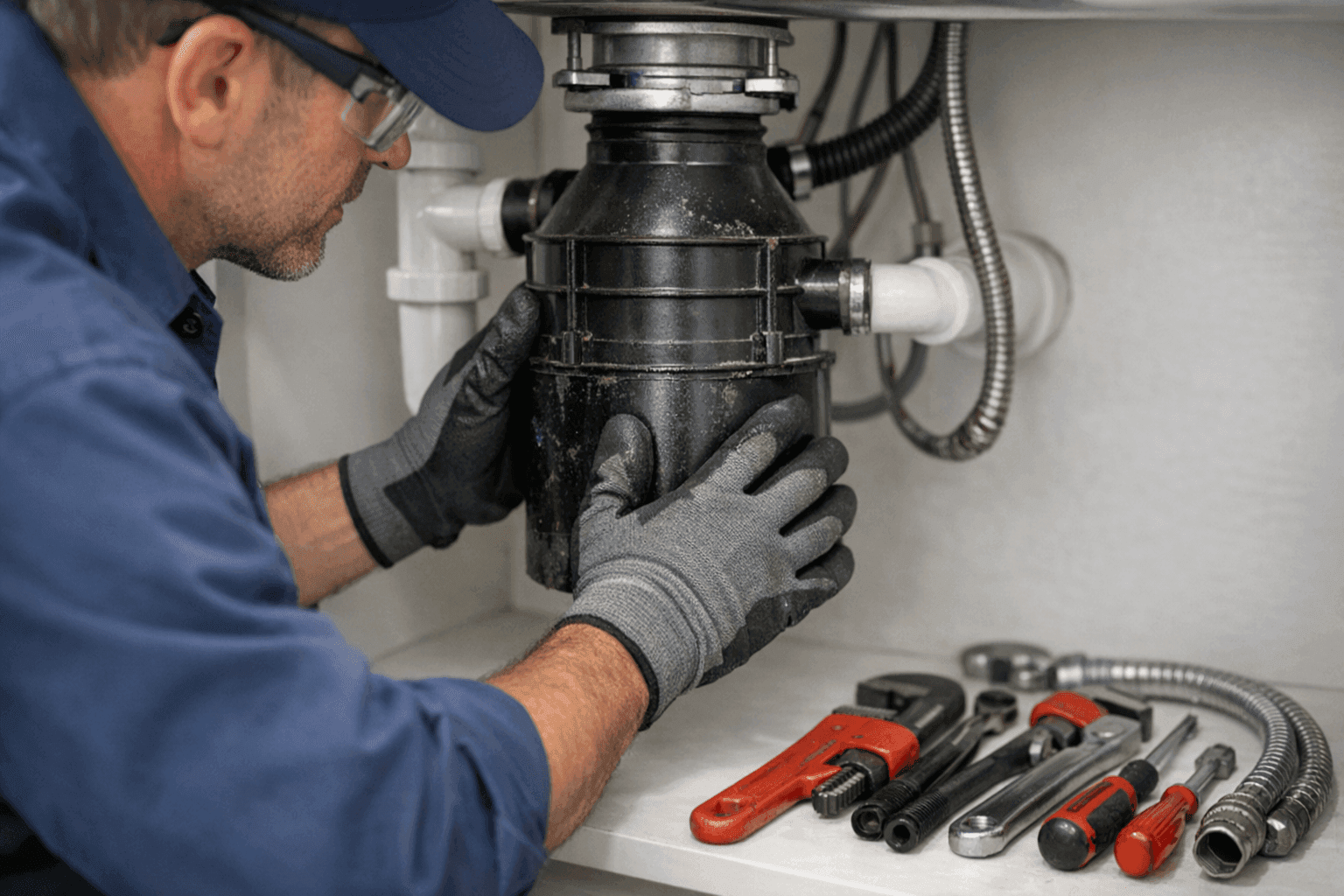
Is your garbage disposal making more noise than your morning alarm? Or does it leave you with a lingering odor every time you walk into the kitchen? Small problems can turn into big headaches fast. At JJL Plumbing, we understand how much a reliable garbage disposal matters for both home cooks and busy commercial kitchens.
Let’s break down the real-world signs to watch for, what you can try at home, and when it’s time to call in professional help. No fluff—just practical advice from seasoned plumbing specialists.
Common Repairable Issues (Jams, Odors, Leaks) 🛠️
A sudden jam. A faint drip under the sink. That mysterious rotten smell. Most homeowners and even business owners will run into these garbage disposal issues at some point. Good news: many are a quick fix.
The Usual Suspects
- Jams: Spoons, bones, or fibrous veggies can wedge the blades. Often, a reset or manual turn with a hex key solves it.
- Odors: Buildup of food residue creates lingering smells. Running ice cubes, citrus peels, or baking soda often clears things up.
- Leaking: If water pools beneath, check for loose mounting bolts or worn gaskets. Sometimes, tightening or replacing seals does the trick.
What You Can Try
- Always disconnect power before checking inside.
- Use tongs or pliers—never hands—to remove stuck items.
- Reset the disposal using the button underneath if it’s silent.
- For stubborn odors, a mix of baking soda and vinegar can freshen things up.
If you find yourself reaching for the plunger or a bucket more often, it might be time to call for garbage disposal repair.
Signs It’s Time to Replace
Repairs are like putting a patch on a well-loved tire. But sometimes, that tire is simply too worn out. Here’s when replacement makes more sense than another repair bill.
Red Flags
- Frequent Resets: Needing to hit the reset button often signals failing electrical or internal components.
- Persistent Leaks: Cracks in the disposal’s body can’t be patched or sealed.
- Loud, Grinding Noises: Metal-on-metal sounds often mean bearings or blades are shot.
- Poor Performance: If food isn’t grinding down, or water drains slowly even after cleaning, the motor could be losing power.
If your disposal is showing these symptoms, a replacement will often save money—and frustration—compared to chasing repairs.
Disposal Lifespan: How Long Should Yours Last?
Think of a garbage disposal as the workhorse of your kitchen plumbing. How long can you expect it to keep going?
- Average Lifespan: Most disposals last 8–15 years with regular use and basic maintenance.
- Commercial Use: In busy restaurants or cafeterias, heavier use can drop that lifespan to 5–8 years.
- Maintenance Matters: Regular cleaning and mindful use (avoiding fibrous or hard objects) help your disposal last longer.
The U.S. Department of Energy notes that overuse or improper installation can shorten lifespan. If your disposal is over a decade old, even if it’s running, replacement may be the better bet.
Modern Disposal Features Worth Considering ⚡
Upgrading your garbage disposal isn’t just about fixing what’s broken. New models offer features that make life easier—and your kitchen safer.
What’s New?
- Quieter Operation: Modern units use insulation and better motors for less noise.
- Anti-Jam Technology: Some units reverse blade direction to break up clogs automatically.
- Sealed Bearings: Help prevent leaks and extend unit life.
- Safety Improvements: Magnetic covers and auto-shutoff reduce accidents.
- Eco-Friendly Models: Some are designed to use less water and energy.
If you’re considering an upgrade, ask about features that match your kitchen’s needs. JJL Plumbing can recommend disposals that fit your sink and your lifestyle.
Quick Safety Checklist Before You Start
Safety first—always. Before you even peek under the sink:
- Cut power at the breaker, not just the switch.
- Use a flashlight to check for standing water or electrical connections.
- Never reach inside a disposal with your fingers, even if you’re sure it’s off.
If you’re unsure about any step, it’s time to call in a professional. Electrical codes and plumbing regulations (like those outlined by the National Electrical Code or local plumbing guides) exist for a reason.
DIY vs. Call a Pro: Where’s the Line?
YouTube videos make it look easy. Sometimes, it is—if you’re comfortable with tools and have a few hours. But certain jobs demand a licensed plumbing company.
DIY—Try This If:
- There’s a minor jam and you have the right tools.
- The reset button works and there’s no water leak.
- You’re replacing a gasket or tightening a visible bolt.
Call a Pro When:
- There’s a burning smell or tripped breaker.
- Water is leaking from the unit’s body, not just fittings.
- You need to install a new disposal, especially if wiring or drains must be modified.
Professional installation ensures your disposal meets code, connects safely to your electrical system, and won’t create hidden leaks down the line. It’s not just about the fix—it’s about peace of mind.
What Pros Do On Arrival
When you call JJL Plumbing, here’s what to expect:
- Assessment: We inspect the disposal and plumbing connections.
- Testing: We run water, check for leaks, and test the motor.
- Troubleshooting: Using specialty tools, we clear jams or diagnose electrical faults.
- Repair or Replace: We’ll recommend the best option, with a clear explanation of costs and benefits.
We’re here to solve the problem, not upsell what you don’t need.
Prevention & Maintenance Tips 🧼
The best way to avoid disposal troubles? Treat it with a little respect.
- Run cold water before, during, and after use.
- Avoid dumping grease, fibrous veggies, or bones.
- Clean monthly with ice cubes and citrus peels.
- If you hear unusual noises, address them quickly.
A little prevention saves a lot of money and mess.
Costs & Time Factors: Repair vs. Replace
Let’s talk dollars and sense. Repairs for simple jams or leaks often fall in the $100–$250 range, depending on parts and labor. Replacement (including a new unit and installation) typically costs $300–$600, depending on disposal type and features.
When to Repair:
- The unit is less than 7 years old.
- The problem is limited to a gasket, switch, or minor jam.
When to Replace:
- The unit is over 10 years old.
- Repairs cost more than half the price of a new unit.
- You want upgraded features or quieter operation.
Factor in the cost of water damage or repeated service calls. Sometimes, a new disposal is the smarter investment.
When It’s an Emergency
Some issues can’t wait. Call for emergency plumbing help if:
- Water is flooding your cabinet or floor.
- There’s a risk of electrical shock (burning smells, tripped breakers).
- Your disposal is clogged and backing up into other drains.
Quick action can prevent bigger, costlier repairs.
Seasonal Considerations for Garbage Disposals
Holidays and events mean more food down the drain—and more risk of jams. Before big get-togethers, run a maintenance cycle. Remind guests (and kids!) what not to put down the disposal. After heavy use, check for leaks or odd noises, and address issues right away.
Common Mistakes That Lead to Trouble
Even the most careful cook slips up sometimes. The biggest disposal mistakes we see:
- Pouring fryer grease or oil down the drain.
- Grinding up fibrous foods like celery or corn husks.
- Overloading the disposal with too much food at once.
- Running the unit without water.
A little awareness goes a long way.
Signs of Trouble: Don’t Ignore These
- Humming but not turning
- Slow draining water
- Reset button needs frequent pressing
- Persistent odors even after cleaning
- Leaking from under the sink
If these persist, it’s time to bring in the professionals.
Timeline & Disruption: What to Expect
Most repairs take less than an hour. Replacements can run 1–2 hours, depending on wiring and plumbing access. JJL Plumbing works efficiently to minimize downtime, whether you’re in a family kitchen or a commercial prep area.
We keep your schedule in mind and clean up before we leave.
Materials & Equipment We Use
We use only high-quality replacement parts, approved by major manufacturers. Our team is equipped with the right tools—hex keys, leak detection sensors, and electrical testers—to diagnose and resolve your issue quickly.
All installations follow local plumbing code and manufacturer guidelines. No shortcuts, no guesswork.
FAQ: Garbage Disposal Repair
Q: What should I never put down my disposal?
A: No grease, bones, corn husks, or glass. Stick to small, soft food scraps.
Q: Can I install a disposal myself?
A: If you’re experienced with plumbing and electrical work, it’s possible. But for most, professional installation is safer and ensures your system is up to code.
Q: My disposal smells even after cleaning. Why?
A: Food may be trapped in hard-to-reach areas. A professional cleaning, or in some cases, disassembly, may be needed.
For more about Kitchen Plumbing in Grand Forks, our team is ready to help.
Conclusion: Repair or Replace? The Bottom Line
Your garbage disposal is a modern kitchen essential. While many problems can be fixed with a little know-how, there comes a time when replacement is the wiser, more cost-effective choice. If your disposal is giving you frequent headaches, don’t wait for a flood or a burnt-out motor.
JJL Plumbing brings experience, honest advice, and skilled hands—ready for any kitchen plumbing challenge.
Call JJL Plumbing now — or reach us anytime at 855-552-2611 .