Gas Safety Checks: Protecting Your Family and Property
Gas lines run like invisible rivers through your home or business. When they flow as they should, you barely notice. But when something’s wrong, the consequences can be immediate—and dangerous.
At JJL Plumbing, we know how urgent gas safety is. From families concerned about their kitchen to property managers overseeing a whole building, everyone benefits from understanding gas safety checks. You don’t have to be a plumbing pro to recognize warning signs or know when it’s time to call for help. Let’s dig in.
Why Gas Safety Matters 🦺
Gas powers our stoves, heaters, and so much more. But it’s not something to take for granted. A minor leak can grow into a major emergency, risking fires, explosions, or carbon monoxide poisoning.
Residential and commercial properties are equally at risk. That’s why regular gas safety checks aren’t just a box to tick—they’re a critical step in protecting lives and investments. According to the National Fire Protection Association (NFPA), gas-related incidents cause thousands of fires and hundreds of injuries each year. Don’t let your property become a statistic.
Signs of Gas Leaks
Gas leaks don’t always burst through the door. Sometimes, they whisper before they roar. Here’s what to watch for:
- Rotten egg smell: Natural gas is odorless, but utilities add a sulfur-like scent so you’ll notice a leak.
- Hissing sounds: Gas escaping from pipes can sound like a snake in the wall.
- Dead plants: If landscaping near your gas line is dying for no reason, the gas underground might be the culprit.
- Dizzy spells or headaches: Carbon monoxide exposure can make you feel off, especially indoors.
- Visible damage: Rusted pipes, loose fittings, or yellow flames on your stove are all red flags.
Don’t ignore these clues. If any show up, act fast.
Gas Appliance Inspections
Your stove, water heater, boiler, and even fireplaces need regular check-ups. Like a car that needs an oil change, appliances are safest when they’re maintained.
During a gas safety check, a professional will:
- Inspect connections and hoses for cracks or wear
- Check flame color (blue means burning efficiently; yellow can signal trouble)
- Test for leaks around valves and shut-offs
- Ensure vents and chimneys are clear
Regular inspections help you avoid surprise breakdowns and extend the life of your appliances.
How Pros Check for Safety 👷
A professional plumbing company uses specialized tools and training. Here’s how the process usually goes:
- Visual Inspection: Checking all exposed lines, joints, and appliances for signs of wear, corrosion, or improper installation.
- Pressure Testing: Sealing off the gas line and adding pressure to see if it drops (which would indicate a hidden leak).
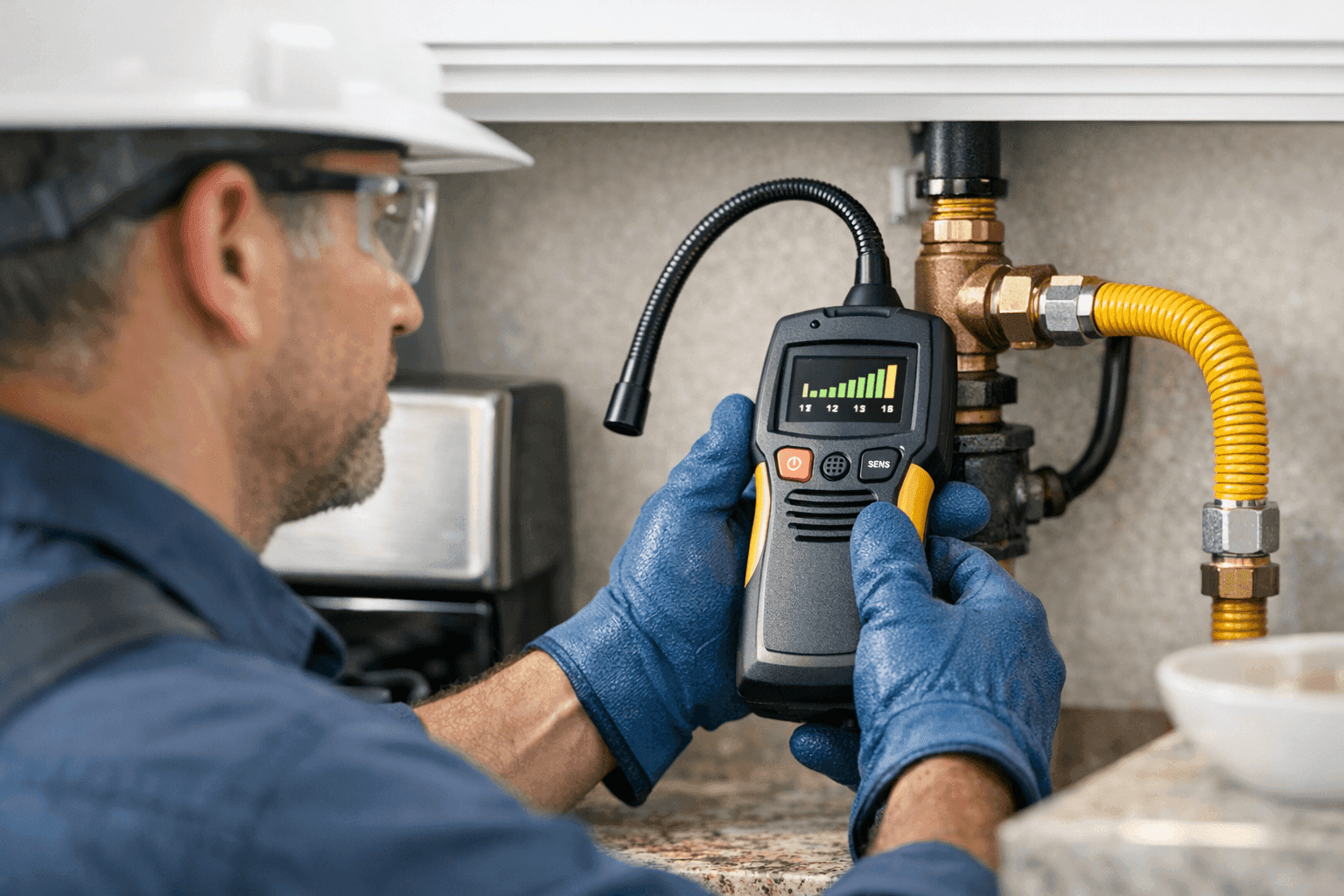
- Leak Detection Tools: Using gas detectors—think of them like high-tech noses—to sniff out even the smallest leaks.
- Appliance Evaluation: Testing every appliance that uses gas to make sure it’s working safely and venting properly.
- Documentation: Providing a report, sometimes required for insurance or local code compliance.
Want to see how this fits with other plumbing services? Check out our Gas Safety Checks in your area.
Emergency Steps: What To Do If You Suspect a Gas Leak 🚨
Time is everything in a gas emergency. Here’s what you should do—no second guessing:
- Leave immediately: Don’t try to find the leak or grab personal items.
- Don’t use electronics: Avoid flipping switches, using your phone, or anything that could cause a spark.
- Open doors and windows: Only if it’s safe and you’re right by them.
- Call for help: Once outside, use your phone to call emergency services and your gas company.
- Don’t re-enter: Wait for the professionals to declare it safe.
Remember, safety first—always.
DIY vs. Call a Pro
Changing a lightbulb? Go for it. Handling gas lines or leaks? That’s a different story. DIY repairs on gas plumbing can be risky—and, in most places, illegal.
Calling a pro isn’t just about tools. It’s about knowing local codes, having insurance, and understanding the domino effects a small mistake can cause. For something as critical as gas, always leave it to a licensed plumber.
Quick Safety Checklist
Want a fast way to check your home or business? Here’s a simple routine:
- Walk your property monthly for strange smells or dying plants
- Make sure appliance vents aren’t blocked
- Schedule annual professional inspections
- Know where your gas shut-off valve is—and how to use it
- Teach everyone at home or work what the warning signs are
A little awareness goes a long way.
When It’s an Emergency
Not every gas issue is urgent, but some demand immediate action:
- You smell gas strongly indoors
- You hear a persistent hissing near gas lines
- You feel symptoms of carbon monoxide poisoning (headache, confusion, nausea)
In these cases, don’t wait. Step outside and call for help right away.
Seasonal Considerations
Gas lines and appliances work harder in winter. Cold weather can cause pipes to contract, leading to leaks. After any major storm or cold snap, it’s smart to check your system—or better yet, schedule a professional inspection.
Summer brings its own challenges. Landscaping projects and digging can accidentally damage buried gas lines. Always call before you dig.
Common Mistakes to Avoid
- Ignoring minor symptoms (“It’s just a faint smell, it’ll go away…”)
- Blocking appliance vents with furniture or boxes
- Forgetting to schedule regular inspections
- Doing DIY repairs without a license
- Not knowing where the shut-off valve is
Avoiding these slip-ups keeps your family, tenants, or employees safer.
Costs & Time Factors
How much does a gas safety check cost? It depends on your property size and how many appliances you have. The good news: regular checks are far less expensive than emergency repairs or insurance claims after an accident.
Time-wise, most inspections take less than two hours. For businesses or larger homes, it could take longer if there are many gas-powered systems.
What Pros Do On Arrival
When the JJL Plumbing team arrives, you can expect:
- A brief walkthrough to assess risk areas
- Setup of gas detection equipment
- Careful inspection of all accessible lines and appliances
- Clear explanation of any findings and next steps
We keep you informed at every stage, so you’re never left in the dark.
Prevention & Maintenance 🛠️
Regular maintenance is your best defense. Schedule annual inspections, especially if you’ve recently renovated or added new appliances.
Consider installing carbon monoxide detectors if you haven’t already—they’re like smoke alarms for gas dangers. The U.S. Consumer Product Safety Commission (CPSC) recommends at least one per floor.
Our Gas Line Installation service is always code-compliant for new appliances or upgrades, putting safety first from the start.
Timeline & Disruption
Worried about disruption? Most checks are quick and non-invasive. If repairs are needed, we’ll outline the expected timeline and keep downtime to a minimum—so your home or business can get back to normal fast.
Materials & Equipment
Licensed plumbers use equipment designed for accuracy and safety:
- Digital gas detectors
- Soap solution for pinpointing leaks
- Manometers for pressure testing
- Safety gear (gloves, eye protection, etc.)
Trying to replicate these tools at home isn’t practical—or safe.
FAQ: Your Gas Safety Questions Answered
Q: How often should I schedule a gas safety check?
A: At least once a year, or before moving into a new property.
Q: Is a faint gas smell always dangerous?
A: Any gas smell should be checked by a professional immediately.
Q: Can I check my own gas appliances?
A: You can check for obvious signs, but professional inspections are required for safety and insurance compliance.
Q: What if my appliances are old?
A: Older appliances are more likely to develop leaks. Schedule inspections more frequently.
Q: Are gas safety checks required by law?
A: Many states and cities require them for rental properties and businesses. Check your local code or ask your plumbing contractor.
Final Thoughts: Don’t Gamble with Gas
Gas safety isn’t just a technical issue—it’s about protecting what matters most. Your family. Your property. Your peace of mind.
Let JJL Plumbing handle your gas safety checks, leak detection, or Gas Line Installation. Reach out today—because when it comes to gas, it’s better to be sure than sorry.
Call JJL Plumbing now — or reach us anytime at 855-552-2611 .