Sewer Line Installation: What to Expect Step by Step
When your sewer line fails, there's no hiding from it. Water backs up. Drains gurgle. Maybe that unmistakable smell creeps in. Suddenly, your home or business is on pause. It’s stressful, and you want answers. Fast.
At JJL Plumbing, we know how disruptive sewer line troubles can be. Whether you own a busy café or a quiet family home, sewer line installation is a major project. But knowing what to expect—step by step—can help you plan, budget, and breathe easier.
When to Install a New Sewer Line 🚨
Not every clog is a crisis. Sometimes, a routine Sewer Line Inspection or simple cleaning will do the trick. But there are times when only a full replacement will keep your property safe and dry:
- Persistent blockages, even after professional drain cleaning
- Sagging or "bellied" pipes causing constant backups
- Major tree root intrusion
- Pipes collapsed or crushed by shifting soil or heavy vehicles
- Outdated materials (like clay or Orangeburg) prone to failure
Think of your sewer line like a backbone—when it’s broken, nothing else works right. If you notice slow drains, foul odors, or soggy patches in your yard, it’s time to talk with a plumbing specialist. Addressing the problem quickly helps prevent costly property damage and health risks.
Permitting and Planning: The Legal Backbone
Sewer line installation isn’t just about digging a trench and laying pipe. Local plumbing codes, building permits, and inspections all play a part. It’s like building a bridge—you need blueprints and official approval before you start.
- Permits: Most cities require a plumbing permit for any sewer line work. This protects you and ensures the job meets safety standards, such as those outlined by the International Plumbing Code (IPC) or your local authority.
- Utility Locates: Before we break ground, utility companies must mark gas, water, electric, and communication lines. Digging blind is dangerous and illegal.
- Planning: Experienced plumbers map out the route, measure elevations, and choose materials. They factor in local soil conditions—clay, sand, or rock each require a different approach.
JJL Plumbing handles the paperwork and planning, so you stay protected from fines and surprises.
Excavation and Pipe Laying: The Heavy Lifting
This is where the real work begins. Imagine an operating room for your yard or parking lot. Precision matters.
- Site Prep: We protect landscaping, fences, and driveways as much as possible.
- Digging the Trench: Using shovels or heavy equipment, we dig a trench (usually 3–6 feet deep), making sure to follow safety rules for proper slope and soil support.
- Old Pipe Removal: If replacing, we cut out the damaged pipe and haul it away.
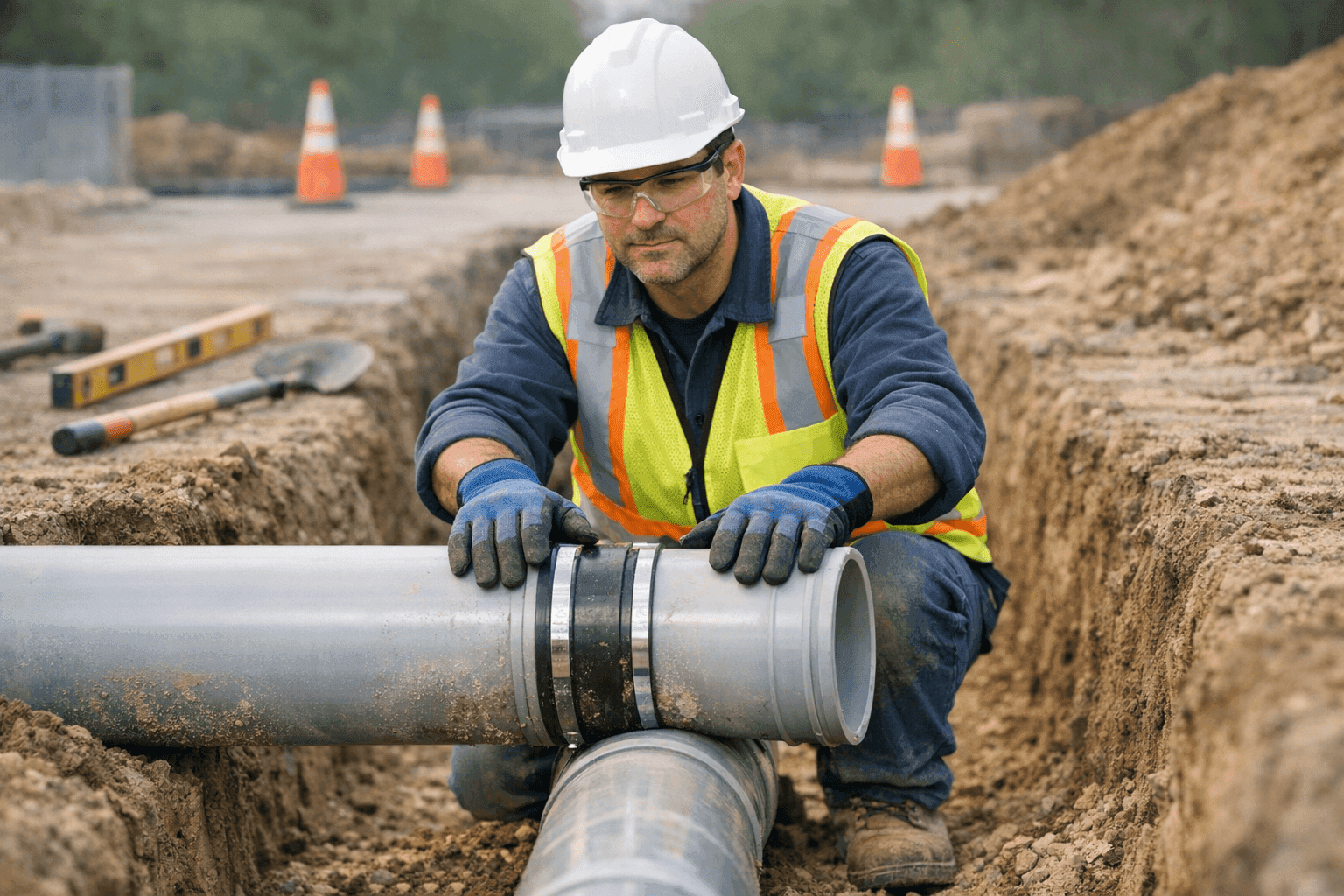
- New Pipe Installation: Modern sewer lines use materials like PVC or HDPE—strong, smooth, and built to last. Each section is carefully joined and leveled to let gravity do its job.
Throughout, we check for obstacles—big rocks, unexpected roots, or hidden surprises. Every step must follow code to avoid future headaches.
Inspection and Testing: Quality Under Pressure 🕵️
You wouldn’t drive a car without brakes, right? We don’t close a trench until the new sewer line passes strict checks.
- Rough-In Inspections: Local inspectors review the work before the trench is backfilled. They’re looking for proper slope, secure joints, and correct materials.
- Water or Air Tests: Pipes are filled with water or pressurized air to check for leaks. Even a pinhole can spell trouble.
- Final Inspection: A last look ensures everything is sealed, safe, and ready for years of service.
Some cities require video camera inspections—a tiny lens snakes through the pipe, confirming no blockages or misalignments. JJL Plumbing follows all local rules, which keeps your project safe and legal.
Avoiding Common Pitfalls: Lessons Learned
Sewer line installation isn’t a job for guesswork. Here’s what can go wrong—and how we keep your project on track:
- Skipping Permits: Unpermitted work can lead to fines, denied home sales, or even forced re-dos.
- Improper Slope: Too flat? Waste stalls. Too steep? Water outruns solids, causing clogs.
- Cheap Materials: Bargain pipes often fail early, leading to new repairs within years.
- Ignoring Soil Conditions: Some soils shift, causing pipes to crack. We assess and adapt.
Want a smooth experience? Ask your plumber about past projects and code compliance. Reliable professionals are happy to explain their process.
Quick Safety Checklist ✅
Safety matters for everyone—residents, workers, and neighbors. Here’s how we keep it secure:
- Marking all utility lines before digging
- Fencing or flagging the job site
- Using trench boxes or shoring to prevent cave-ins
- Keeping children, pets, and visitors away
JJL Plumbing trains every team member in OSHA safety standards and local regulations.
DIY vs. Call a Pro: Know Your Limits
Some home projects are great for a Saturday afternoon. Sewer line installation isn’t one of them. The risks—structural collapse, code violations, and injury—are real.
- Permits and Inspections: Homeowners can’t always pull the right permits.
- Specialized Equipment: This is not a job for a basic shovel and a good attitude.
- Code Knowledge: Mistakes hide underground, but consequences surface quickly.
For peace of mind, let licensed plumbing contractors handle the complex jobs. If in doubt, get a second opinion.
What to Expect When Pros Arrive
On installation day, expect a flurry of activity. Trucks, equipment, and a crew ready to work. Here’s how it typically unfolds:
- Walkthrough of the property and discussion of the plan
- Site prep and marking of work areas
- Digging and pipe installation
- Inspection and testing
- Backfilling and cleanup
Clear communication is key. If you have pets, fragile landscaping, or special requests, mention them up front.
How Long Will It Take? Timelines and Disruption
No two jobs are identical. Weather, soil type, and pipe length all matter.
- Simple Replacements: 1–2 days
- Complex Installations: Up to a week (especially in tough soil or under paved surfaces)
- Restoration: Sodding, concrete patching, or landscaping may take extra time
JJL Plumbing works efficiently, but we never rush safety or quality. We’ll keep you updated at every step.
Costs: What Factors In?
Price depends on:
- Pipe length and depth
- Material choice
- Soil and site conditions
- Permit and inspection fees
- Restoration (landscape, concrete, etc.)
We provide clear, upfront quotes so you aren’t surprised later. Remember, quality plumbing protects your property and investment.
Materials and Equipment: Built to Last
Modern sewer lines use materials that outlast old clay or cast iron pipes. At JJL Plumbing, we typically use:
- PVC (Polyvinyl Chloride): Smooth, tough, and corrosion-resistant
- HDPE (High-Density Polyethylene): Flexible and strong, especially for tough soil
We use laser levels, pipe lasers, and camera inspection tools to get the job done right—the first time.
Seasonal Considerations: Timing is Everything 🌦️
Sewer line installation is best done in mild weather. Heavy rain, deep frost, or frozen ground can delay work—or make it more expensive. If possible, schedule major plumbing jobs during spring or fall for smoother sailing.
Signs of Trouble: Don’t Ignore the Warning Lights
Sewer line problems don’t fix themselves. Watch for:
- Multiple slow drains or frequent clogs
- Water backing up in unexpected places (like the bathtub when you flush)
- Patches of lush, green grass over the sewer line (a sign of leaks)
- Gurgling sounds or strange odors
If you notice any of these, consider scheduling a Sewer Line Installation in your area.
Prevention & Maintenance
After installation, a little care goes a long way. Here’s how to keep your new sewer line flowing:
- Don’t flush wipes, paper towels, or grease
- Schedule a professional sewer line inspection every few years
- Watch for early warning signs, and act fast
Good habits and routine maintenance protect your investment.
Frequently Asked Questions
Q: How deep is a typical sewer line?
A: Most are 3 to 6 feet deep, but it depends on local code, frost lines, and site layout.
Q: Will my yard be a mess?
A: There will be some disruption, but we do our best to minimize damage. Restoration is part of the process.
Q: How do I know if I need a full replacement?
A: Persistent clogs, repeated repairs, or video inspection showing severe damage are strong indicators.
Q: What are the main risks if I delay repair?
A: Water damage, health hazards, and costly emergency work down the line.
Closing Thoughts: Prepare, Don’t Panic
Sewer line installation is a big project, but with the right team and information, you can face it with confidence. Knowing the steps, legal requirements, and potential pitfalls makes the process less daunting.
At JJL Plumbing, we treat your property with respect—and keep you informed every step of the way. Need help right now, or just have questions about plumbing? We’re here to help.
Call JJL Plumbing now — or reach us anytime at 855-552-2611 .